
Both vaginal contraceptive film (VCF) and vaginal contraceptive gel are designed to immobilize and kill sperm, thereby preventing fertilization. However, their effectiveness and convenience may vary.
Let’s take a look at other pros and cons of using VCF versus vaginal contraceptive film.
Pros of Vaginal Contraceptive Film (VCF):
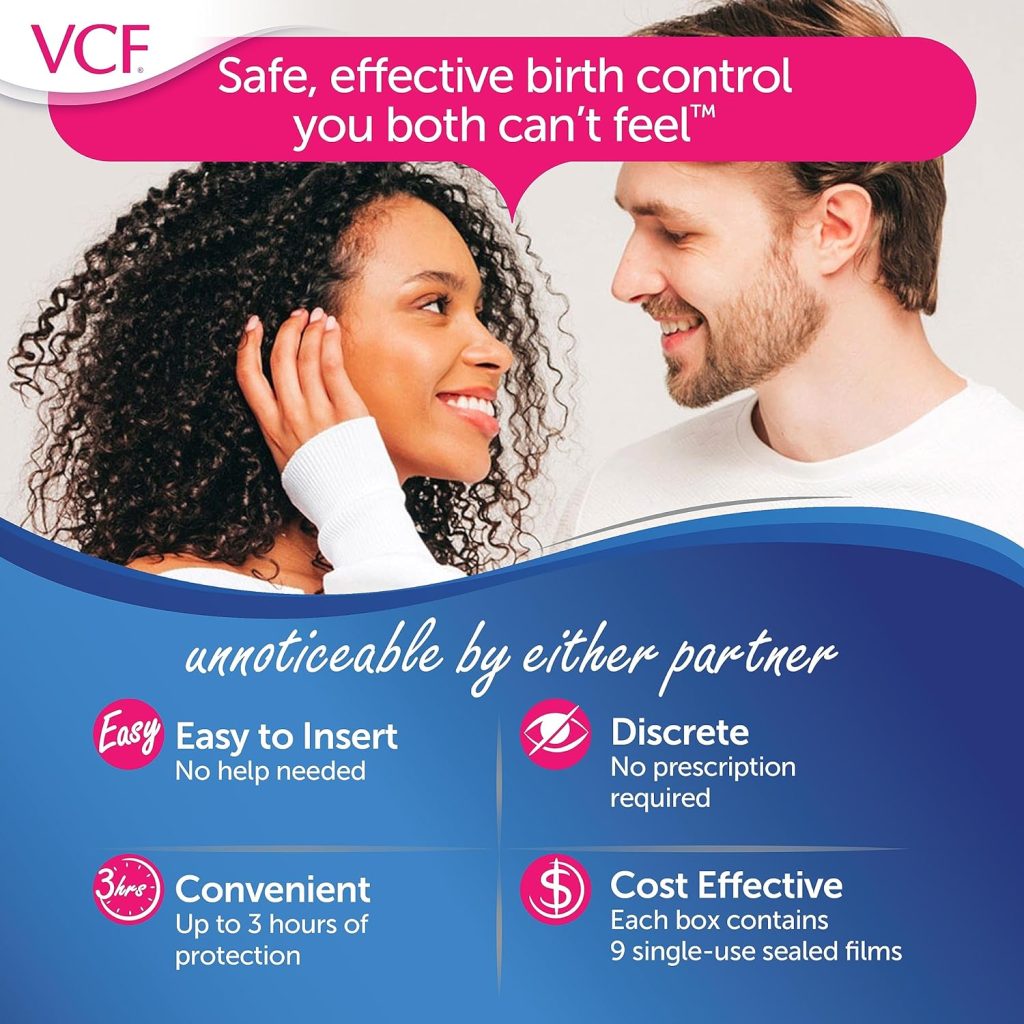
1. Convenience: VCF comes in a small, dissolvable film that can be discreetly inserted into the vagina, making it easy to carry and use.
2. Effectiveness: VCF has a relatively high effectiveness rate when used correctly, offering up to 94% protection against pregnancy, according to the company that created VCF and Planned Parenthood in Toronto. However, according to Centers for Disease Control and Prevention (CDC), VCF has shown a failure rate of approximately 21%. This mean that typical use may result in 21 pregnancies out of 100 over a year. Vaginal contraceptive gel, when used correctly and consistently, has been reported to have a failure rate of around 14%. This is also according to the CDC data; however, the company that created VCF claims a much higher effectiveness of 94%.
3. No hormonal side effects: Unlike many other forms of contraception, VCF does not contain hormones, so it can be suitable for those who prefer non-hormonal birth control options.
4. No prescription required: VCF is an over-the-counter contraceptive method, meaning it can be easily obtained without a prescription from a healthcare provider.
Cons of Vaginal Contraceptive Film (VCF):
1. Insertion timing: VCF needs to be inserted at least 15 minutes before sexual activity, which may require some planning and forethought.
2. Effectiveness variability: The effectiveness of VCF may vary depending on individual usage and adherence to instructions. It is crucial to follow the instructions carefully for optimal effectiveness.
3. Sensitivity to certain individuals: Some individuals may be sensitive or allergic to the ingredients used in VCF, such as nonoxynol-9 (N-9), which can cause irritation or discomfort.
Pros of Vaginal Contraceptive Gel:
1. Ease of use: Vaginal contraceptive gel can be applied directly to the cervix or inserted into the vagina using an applicator, making it simple to use.
2. Increased lubrication: The gel can help increase vaginal lubrication, reducing discomfort during intercourse for some individuals.
3. Prevents sperm from entering the cervix: The gel creates a barrier that prevents sperm from reaching the cervix, reducing the risk of fertilization.
4. No hormones: Similar to VCF, vaginal contraceptive gel does not contain hormones, making it a suitable choice for those who prefer non-hormonal contraception.
Cons of Vaginal Contraceptive Gel:
1. Potential irritation: Some individuals may be sensitive to the ingredients in the gel, like N-9, leading to irritation or allergic reactions. It is important to check for any potential allergies before use.
2. Application timing: Similar to VCF, the gel needs to be applied shortly before sexual activity, which may interrupt intimate moments.
3. Effectiveness variability: The effectiveness of the gel may vary depending on individual usage, adherence to instructions, and even certain factors like the presence of vaginal infections or medications.
4. Requires prescription: Vaginal contraceptive gel usually requires a prescription from a healthcare provider, which can pose a barrier for individuals without easy access to medical care.
What is Nonoxynol-9 (N-9)?
Nonoxynol-9 (N-9) is a chemical compound that is commonly used as a spermicide in various contraceptive products such as condoms, gels, creams, and foams. It works by disrupting the cell membranes of sperm, thereby preventing them from reaching and fertilizing the egg.
While N-9 is generally safe for most people when used as directed, it can cause allergic reactions in some individuals. Allergic reactions occur when the immune system mistakenly identifies a substance as harmful and releases chemicals, such as histamines, to defend against it. This immune response can result in various symptoms, including itching, redness, swelling, rash, and discomfort.

Why do some people experience allergic reactions to N-9?
1. Sensitivity: Certain individuals have a higher sensitivity or intolerance towards N-9. This sensitivity can trigger an allergic reaction even at lower concentrations or with minimal exposure to the chemical.
2. Irritation: N-9 can irritate the skin and mucous membranes in some individuals. Prolonged or excessive exposure can damage delicate tissues, causing redness, itchiness, and inflammation.
3. Underlying conditions: Individuals with pre-existing allergies or skin conditions such as eczema or dermatitis may be more susceptible to allergic reactions from N-9. These conditions compromise the skin’s barrier function, making it easier for N-9 to penetrate and trigger an immune response.
There are many products containing the N-9 spermicide, including condoms, vaginal films, jellies, foams, and sponges, that are sold online or in local pharmacies without a prescription. As long as they are used as instructed, medical doctors claim they are completely safe. This includes only using them once per day. Also, avoid using N-9 with multiple partners or with a partner who is HIV-positive.
What do field experts have to say about N-9?
Contrary to popular belief, N-9 is actually quite successful at eliminating the germs that lead to STDs like chlamydia, gonorrhea, and HIV, according to Michael Rosenberg, a former researcher at the Centers for Disease Control and Prevention. However the problem is that the cells that line the vagina and the rectum can be irritated by N-9. If they become irritated that makes them more susceptible to attack by the same STD viruses and bacteria.
According to Rosenberg, nonoxynol-9 acts like a detergent and disturbs the layers of cell membranes. If used regularly, N-9 has the potential to destroy many of the cells that serve as a defense against these diseases. Thus, although it helps with one issue it can potentially create other issues with frequent usage.
Why are N-9-containing goods even still on the market?
1. One explanation is that fewer than 1% of American women use spermicides.
2. Secondly, according to medical experts, the majority of the women who use spermicides are unlikely to have an HIV-positive partner, which means it is okay that spermicides do not protect against HIV.
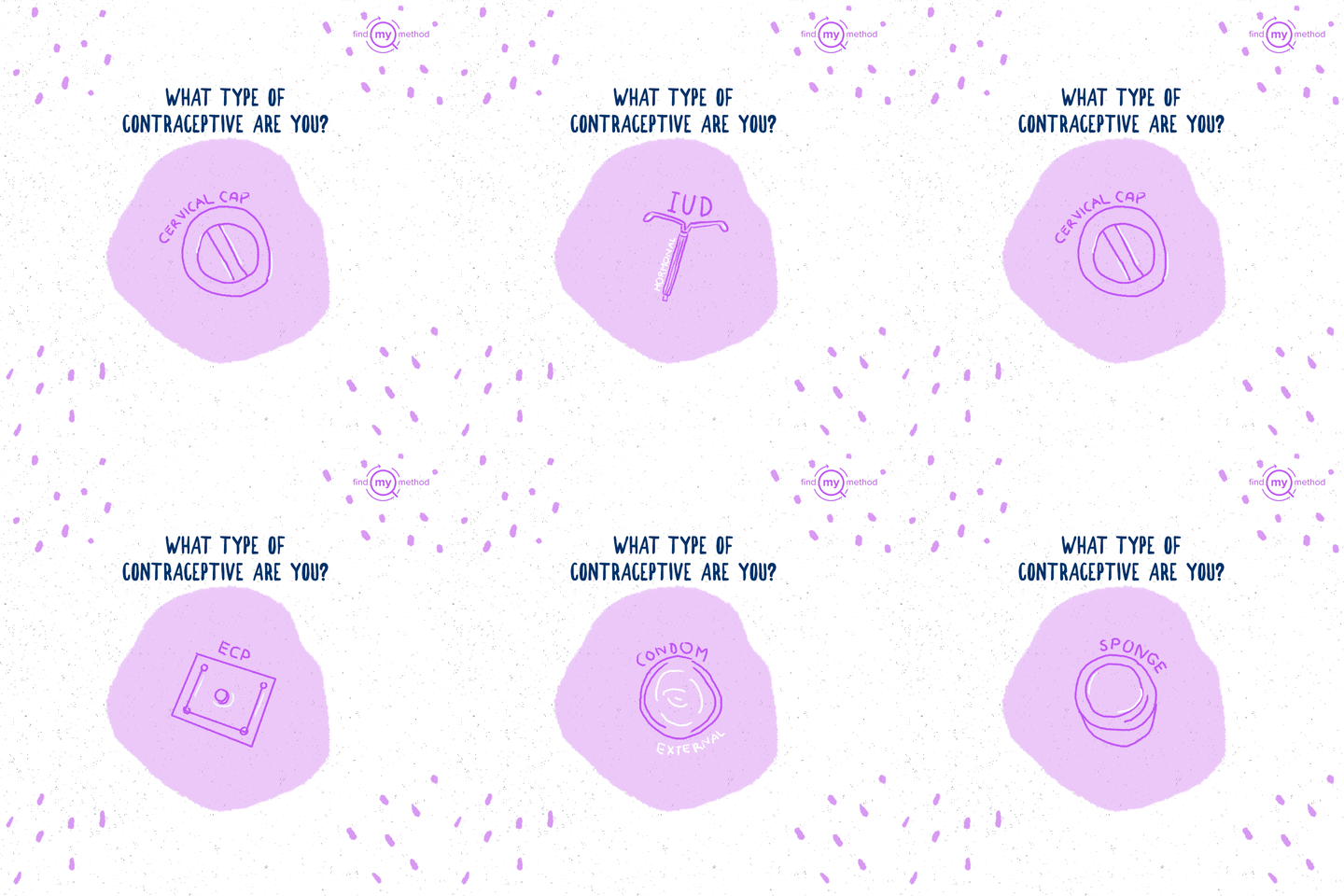
3. Spermicides are used in conjunction with barrier birth control devices, like the cervical cap and diaphragm, to help improve its effectiveness against sperm.
4. Eliminating N-9 from the product would mean women would not have any nonhormonal birth control options available.
Overall, if you are seeking a nonhormonal birth control method, both the 










+ There are no comments
Add yours